 Cloud 9· restoration

1:47 AMFOR RESTORATION COMPANIES · WATER, FIRE, MOLD, STORM · EN ⇄ ES
Water doesn’t wait for business hours. Now your front desk doesn’t either.
The loss happens at 1:47 AM, and it goes to whoever answers while it’s still spreading. Cloud 9 picks up on the first ring — captures the loss on your intake, pages your on-call tech by your dispatch rules, texts the family an arrival window, and then works everything the emergency leaves behind: the rebuild bid, the referral network, the reviews that win the next panic search. Fourteen jobs, one desk. The claim never leaves your side of the line.
$1,497/mo — front desk + marketing, everything included. First month today · no setup fee · cancel anytime.
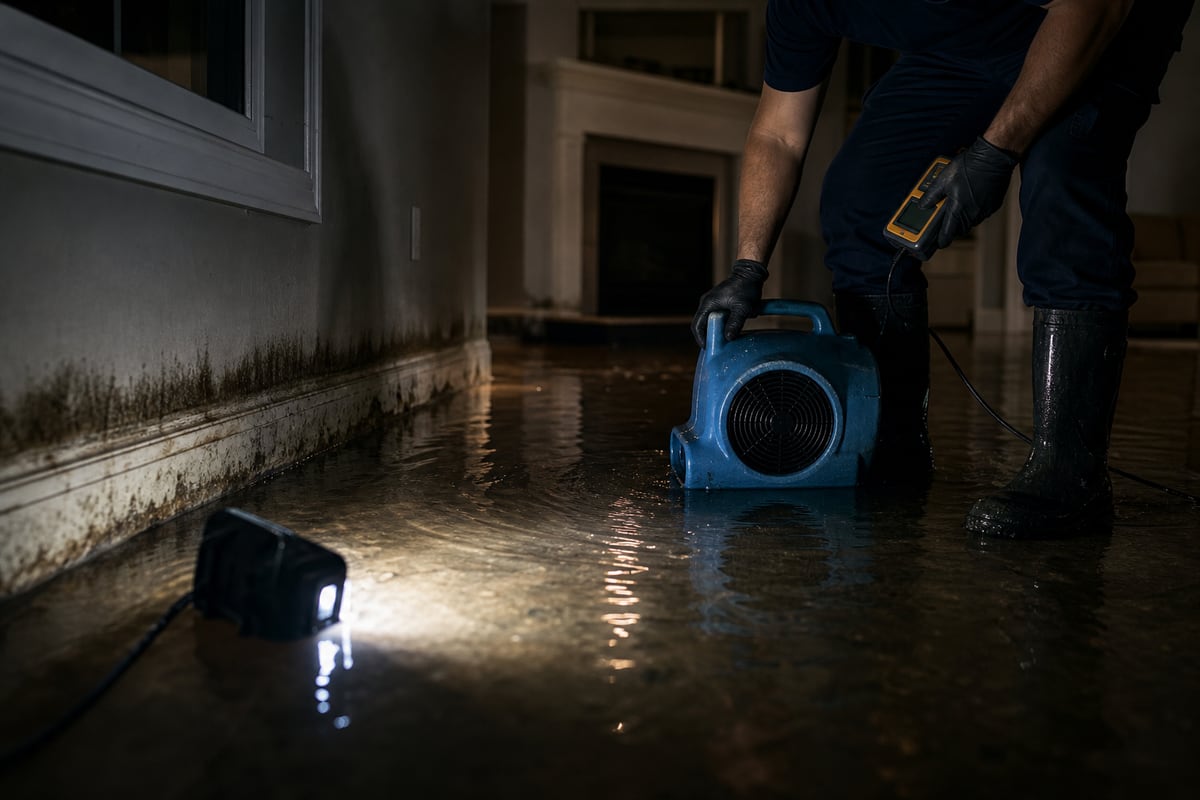
2:20 AMTHE FIRST HOUR, WHERE THE JOB IS WON
Every hour it spreads, somebody else’s phone is ringing.
A family with water at their ankles doesn’t leave voicemails — they call down the list until a human-fast voice answers, and the mitigation ($3,000–$10,000 and up on typical losses — market ranges, not an estimate) goes to that company. Answering a new lead in five minutes instead of thirty makes you up to 21× more likely to qualify it (MIT Lead Response Study, 2007), and roughly 27% of callers who reach nobody never call back (Invoca). At 2 AM the effect isn’t a statistic; it’s the whole job.
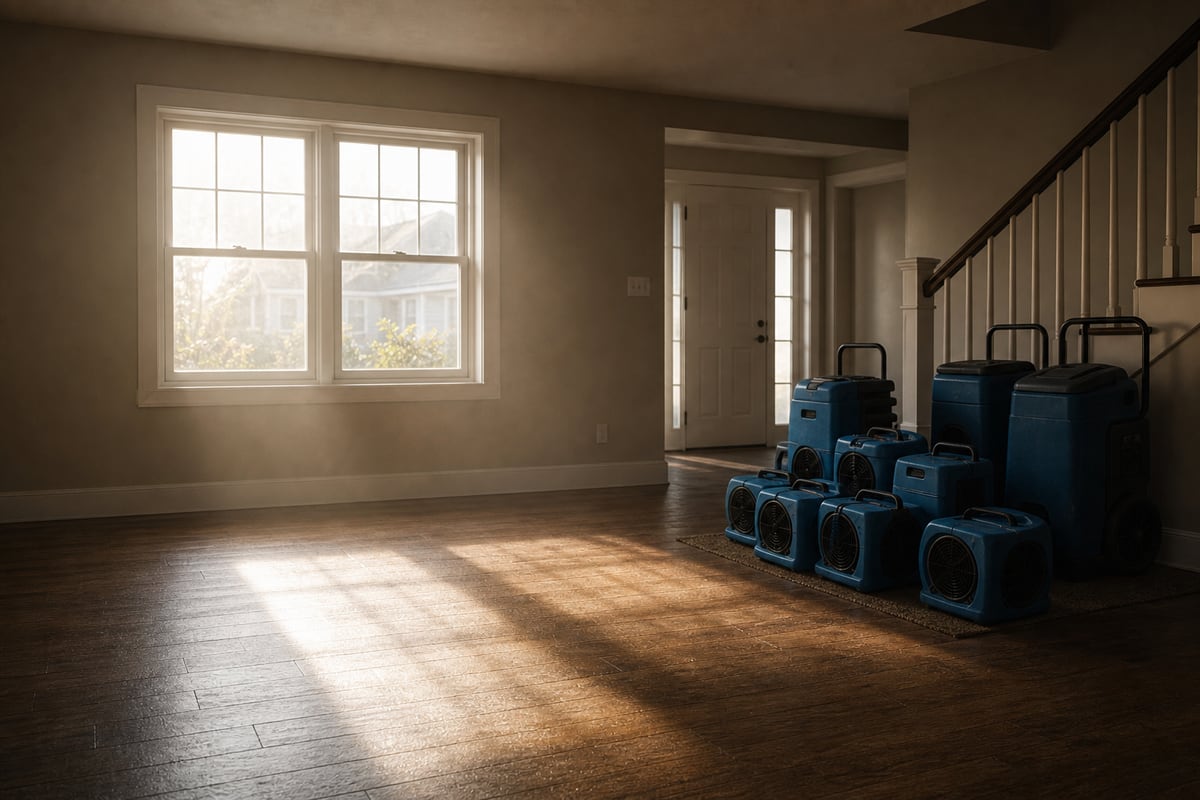
DAY 3THE TAIL, WHERE THE MONEY LEAKS QUIETLY
Mitigation ends in days. The rebuild decision takes weeks — chase it.
The family is exhausted, the adjuster is slow, and your reconstruction estimate is one more decision they’re avoiding. 93% of leads that convert are reached by the sixth attempt (Velocify, ~3.5M leads) — and nobody running crews makes attempt four. The desk runs the cadence in your name until the family signs or says no. And between losses it works the list that actually feeds you: the plumber who refers, the agent who recommends, the adjuster who remembers — thanked after every job, checked in on every quarter, told when your board opens up after a storm.
Bid follow-up → Referral network → Email & text → Deductibles by text →
8:04 AMTHE SEARCH THAT DECIDES THE NEXT LOSS
Panic reads fast. Give it something to find.
Nobody researches restoration calmly — they read for ninety seconds with a shop vac running. Around 98% of people read reviews for local businesses, and 88% would pick a business that replies to its reviews — versus 47% for one that ignores them (BrightLocal, 2024). And the field is still asleep — Jobber’s trends survey draws the line plainly: 88% of the home-service shops confident about the year ahead run AI; among those bracing to lose ground, 27% (Jobber Home Service Trends, 2026). Reviews asked after every dry-out and answered in your voice; pages that win “water damage restoration near me”; listings correct on every map; storm-week ads at cost when you want the volume. That’s how you become the first name panic finds.
Reviews → Local SEO → Websites → Listings → Social → Storm ads at cost →
ANY HOURTHE ADJUSTER’S LINE, NEVER CROSSED
The desk answers everything except the claim.
It never scopes a loss, never estimates a repair, and never guesses what insurance will pay — the scope belongs to your estimator and the adjuster.
It records the carrier and claim number for your file, routes adjuster calls to you, and negotiates with no one.
Health and hazard questions — “is this mold dangerous?” — go to your certified tech word for word, with the caller told help is on the way, not given advice.
Dispatch runs on your written rules: what pages the on-call phone, what books the morning, what gets qualified and declined.
Every transcript is yours — readable anytime, never shared or sold. And this desk has someone on call for it too: Willie. Cloud 9 is his San Antonio company, and the number above rings a desk he answers to personally.
AT THE DOORSIGNED — LIKE EVERYTHING ELSE IN THIS TRADE
One work authorization. Fourteen jobs on the scope.
WORK AUTHORIZATION · CLOUD 9 DIGITAL MARKETING · SAN ANTONIO, TX
All fourteen jobs — the 24/7 desk and the marketing team, run for you: front desk · bilingual · dispatch & windows · text-back · bid follow-up · referral nurture · deductibles by text · reviews · local SEO · site & pages · listings · social · storm ads at cost · email & text — or walk the whole machine and the one price.
$1,497/MO month-to-month · $998/MO billed annually ($11,976 — four months free)
First month today · no setup fee · cancel anytime · live in ~4 days · texting from your number once carrier registration clears · ad budget at cost
BEFORE SIGNINGASKED BY OWNERS WHO’VE BEEN BURNED
What restoration owners ask first.
It’s 2 AM and a homeowner is standing in an inch of water. What literally happens?
The call is answered on the first ring — a calm voice in the caller’s language. The desk captures the loss the way your intake sheet would: address, source if known, whether the water is stopped, rooms affected, insurance carrier if they have it. Real emergencies page your on-call tech immediately by your dispatch rules; the caller gets shut-off guidance only if you’ve preset it, an arrival window, and a text confirmation. You wake up to a dispatched job, not a voicemail from a family that already called your competitor.
Where’s the line on insurance? I don’t want anything said about a claim.
Hard line, never crossed. The desk never scopes a loss, never estimates coverage, never characterizes what insurance will or won’t pay, and never negotiates with anyone — it can note the carrier and claim number for your file and politely route adjuster calls to you. The claim, the scope, and every dollar conversation stay with your estimator and the adjuster, where they belong.
Half our night calls aren’t real emergencies. Can it tell the difference?
That’s the triage you preset. A burst line flooding a kitchen pages your on-call tech now; a musty smell in a crawlspace books tomorrow’s first inspection slot; a price-shopper gets your qualifying questions instead of your foreman’s sleep. You write the rules — what wakes someone, what waits, what gets booked — and the desk applies them the same way at 2 PM and 2 AM.
Mitigation ends and the reconstruction bid just… sits. Can it chase that?
That’s one of its favorite jobs. The family is exhausted, the adjuster is slow, and your rebuild estimate is one of several decisions they’re avoiding — so it gets the polite cadence: the check-in, the schedule reality (crews book out), the gentle deadline, the offer to walk the scope again. 93% of leads that convert are reached by the sixth attempt (Velocify); nobody running crews has time for attempt four. The desk never loses count.
¿Atiende en español a las 2 de la mañana?
A cualquier hora, completo. La emergencia entera — la captura de la pérdida, el despacho de su técnico de guardia, la ventana de llegada, la confirmación por texto y todo el seguimiento de la reconstrucción — se maneja en español o en inglés, cambiando de idioma a mitad de la llamada si hace falta. En una emergencia, la familia que puede explicar el problema en su idioma llama a la empresa que contesta en ese idioma.
Most of my work comes from plumbers, agents and adjusters. Does this help there?
It finally works that network like the asset it is. Every referral source gets answered like a VIP when they call with a loss, and the machine keeps you in front of them between losses — the thank-you after every referred job, the quarterly check-in, the update when your capacity opens after a storm. A plumber who refers once and hears nothing refers somewhere else next time; one who gets a same-hour callback and a thank-you keeps sending water your way.
When a pipe bursts, people just call the first name they see. How do I become that name?
By winning the panic search before it happens. Around 98% of people read reviews for local businesses, and 88% would pick a business that replies to its reviews, versus 47% for one that ignores them (BrightLocal, 2024) — and in this trade the reading happens in ninety seconds with a wet vac running. Meanwhile Jobber’s trends survey draws the line plainly: 88% of the home-service shops confident about the year ahead run AI — among those bracing to lose ground, 27% (Jobber Home Service Trends, 2026). Reviews asked after every job, answered in your voice; pages that win “water damage restoration near me”; listings correct everywhere; ads at cost when a storm makes you want them.
What does it cost, and what’s the catch?
$1,497 a month flat for all fourteen jobs — the desk and the marketing together. Billed annually it’s $998 a month ($11,976 for the year — four months free). First month today, no setup fee, month-to-month, cancel anytime, ad budget at cost. The catch reads in your favor: one mitigation job you would have lost to voicemail covers months of it, and your rate is written into the file the day you start — later price changes never touch it.
TONIGHTSOMEWHERE ON YOUR SIDE OF TOWN
The next loss is already in a wall somewhere. Be the first ring it reaches.
Your crew already knows what to do with water. What they’ve never had is a desk that answers at the hour water happens — captures the loss, wakes the right person, calms the family, and then chases every dollar the emergency leaves behind. Stand it up before the next 2 AM.
Rather see the numbers before talking to anyone? Run the free 60-second audit for your restoration company — your score comes first.
SE HABLA ESPAÑOL · THE CLAIM STAYS YOURS · SAN ANTONIO, TX
Cloud 9 for the emergency trades: all industries · pricing · the machine · plumbing · roofers · electrical