 Cloud 9 — HVAC

FOR HVAC SHOPS · THE WHOLE LOAD CURVE, WORKED · EN ⇄ ES
July pays for April. The shop that put AI on its whole year keeps both months.
Everyone survives the surge — the phones melt, the board fills, the money runs. It’s the valley that kills HVAC shops: payroll due, vans parked, quotes gone quiet. Cloud 9 works the entire curve with one team of fourteen — catches the 102° afternoon call by call, chases every changeout to a decision, and refills March and October from the customer base you already own.
$1,497/mo — front desk + marketing, everything included. First month today · no setup fee · cancel anytime.
Your revenue is a load curve. Most shops only staff the peaks.
Two surges carry the year; two valleys eat it. Marketing bought in July arrives in September — the valley is decided months earlier, out of your own customer list. The private-equity groups consolidating this trade run this curve with call centers and campaign calendars. This is the same machine at independent-shop price.
An April Thursday: two calls on the board, six people on payroll.
The valley isn’t filled in the valley. It’s filled from the asset the surge left behind — every customer you’ve ever served — worked steadily while your competitors wait for weather.
WEEK OF APRIL 14 · THE ROUTE BOARD
Six jobs the weather didn’t send — pulled out of your own list.
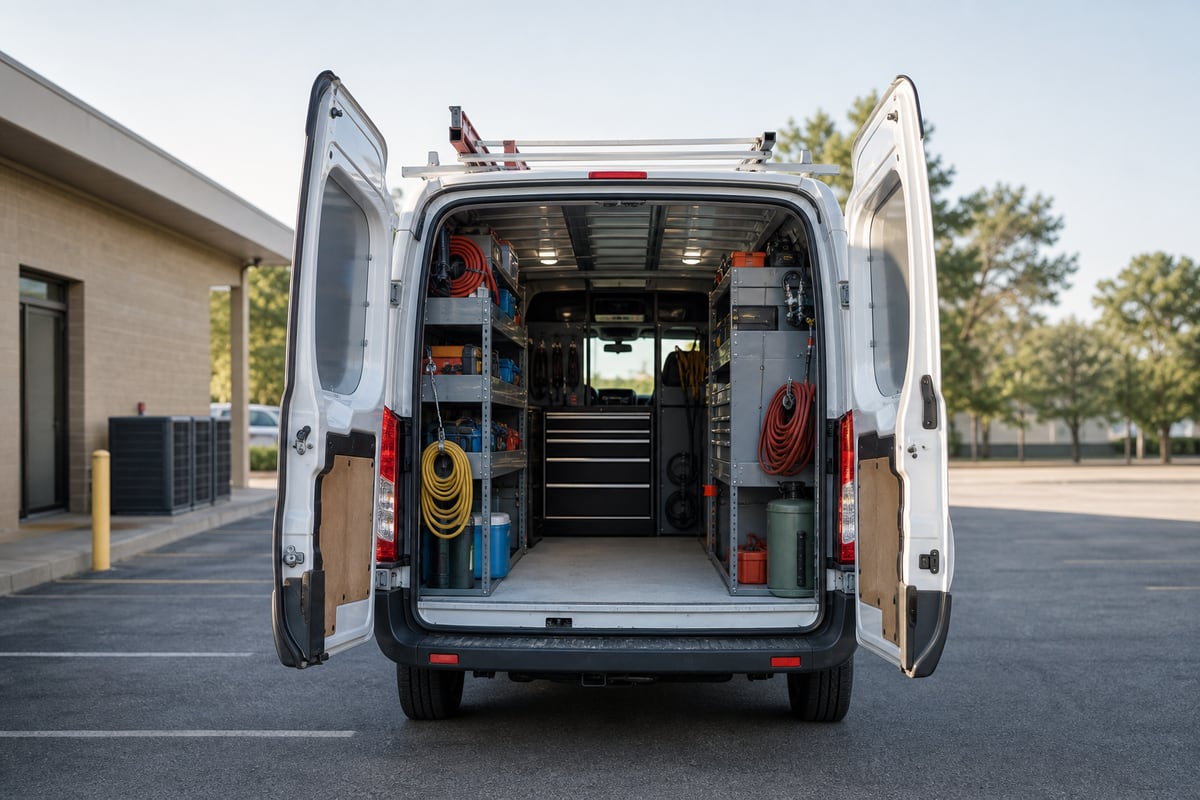
- The agreement base, actually run. Renewals invoiced on schedule, lapsed members re-invited, every visit booked and reminded. Invoicing → Booking →
- The win-back. Customers you haven’t seen in two seasons get the text before the weather gets them. Win-back → Email & text →
- The screen you win in March. Reviews asked after every job, the profile tended, the map held — so the valley’s few searches land on you. Reviews → Local SEO → Listings →
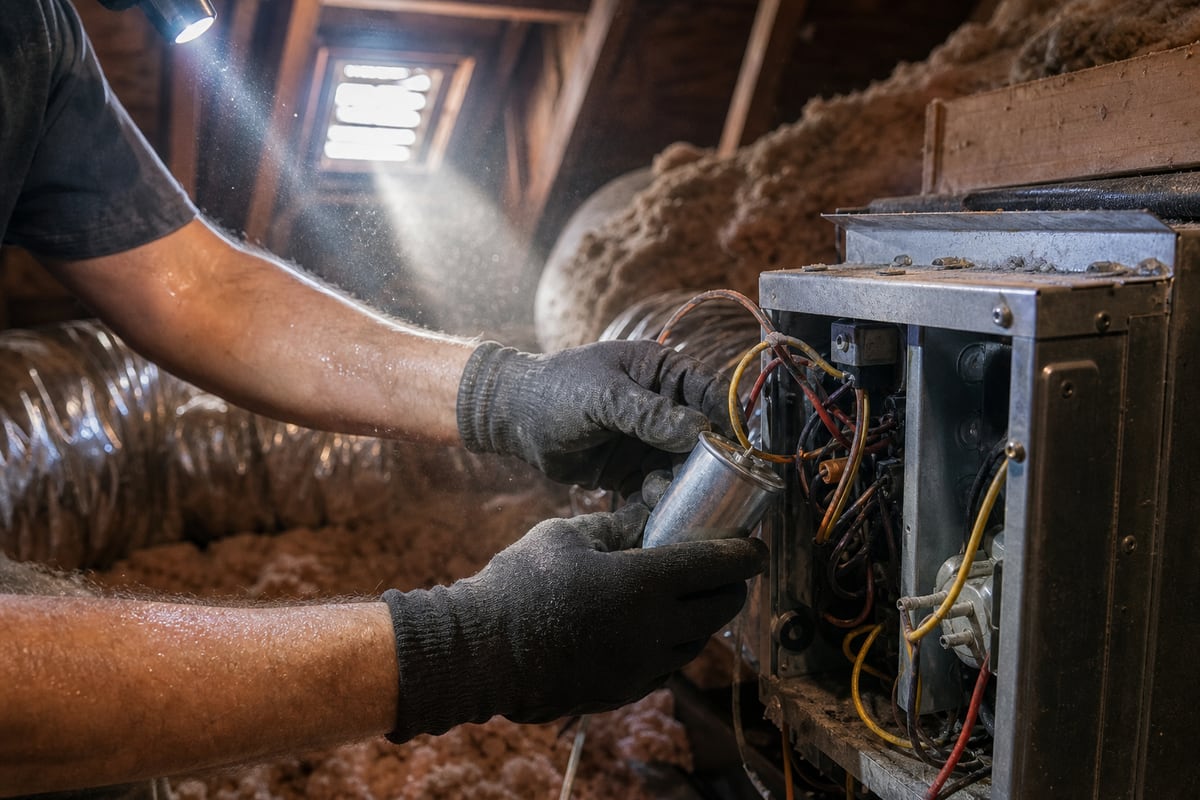
You bid the changeout Tuesday. So did two other shops. Then everyone went quiet.
Replacements are where the year’s profit lives, and they’re decided over days, not on the driveway. The homeowner isn’t choosing the best install — she’s choosing the shop that answered the ductwork question on Thursday night. The desk runs that race for every open quote: the day-two check-in, the financing option in plain numbers, every objection answered in your words, on the record.
FOLLOW-UP · RATING PLATE
Almost nobody follows up six times by hand. The desk never loses count.
When the surge hits, every call is same-day money. About 27% of them ring out.
Roughly 27% of callers give up and never call back if their first call goes unanswered (Invoca). A surge doesn’t leave voicemails; it dials the next shop. The desk answers every call at once, all day, all night, both languages — and your on-call rules decide what wakes a tech.
- The gauges are yours. It never diagnoses over the phone, never quotes repair work, never talks a customer into or out of equipment. It books the visit at your trip fee; your techs do the trade.
- Your shop’s voice. Your service area, your brands, your after-hours rules, your Spanish — and every word it says readable by you. How the night line works is its own field note.
- Ads at cost, reviews never gated. Every ad dollar reaches the platform with nothing skimmed; every customer gets the review ask, nobody gets filtered.
- Your list stays yours. The customer base this machine works belongs to your shop — the opposite of a lead seller renting your own neighbors back to you.
- Run by people you can call. Cloud 9 is Willie’s shop in San Antonio. The number in the corner is answered by the same desk we’re selling you — test it during a heat wave.
You sell maintenance agreements. Here’s ours.
Fourteen jobs on one flat rate — because the curve only flattens when the surge team, the follow-up team, and the valley team are the same team.
COVERAGE — ALL FOURTEEN JOBS, ONE SPEC
24/7 answering EN ⇄ ES · surge-proof simultaneous calls · booking on your board · missed-call text-back · changeout follow-up · agreement renewals & invoices · win-back campaigns · tune-up email & text · review asks & replies · local SEO & the map · website & landing pages · listings kept correct · social posting · ads with spend at cost
RATE — HOLD AT ONE SETPOINT
First month today · no setup fee · cancel anytime · ad budget at cost · your rate locks the day you start · live in ~4 days, texting from your number once carrier registration clears
Every job on the coverage list has its own page: front desk · bilingual · booking · text-back · follow-up · invoicing · win-back · reviews · local SEO · websites · listings · social · ads · email & text — or walk the whole machine and the one price.
What owners check before they sign.
At 3:47 on a 102° day, three calls hit at once. What actually happens?
All three get answered — in the same second, in English or Spanish, in your shop’s name. The no-cool with a newborn in the house books the next truck. The “it’s blowing warm but livable” books tomorrow’s first slot. The thermostat question gets an answer and a tune-up offer. Nothing rings out, nothing rolls to voicemail, and your dispatcher isn’t triaging a voicemail box at 6 PM — the board is already built.
And what is it doing in October, when nobody’s system is broken?
The valley work — which is the whole point. It runs your recall list: the aging systems due for a look, the expired maintenance agreements re-invited, the customers you haven’t seen in two winters texted before the first freeze. It sends the seasonal tune-up campaign, keeps the reviews coming while the surge is fresh, and holds your spot on the map for “furnace repair near me.” The shops that die in the shoulder season are the ones that only exist in July.
My changeout quotes get shopped against two other bids. Can it win those?
It can keep you in the race, which is where changeouts are won. Every open quote gets a cadence — the day-two check-in, the financing option laid out plainly, the answer to “what about the ductwork,” each touch in your words and on the record. Answering a new lead in five minutes instead of thirty makes you up to 21× more likely to qualify it (MIT, 2007), and the same physics runs the whole quote: the shop still talking on day six is usually the shop that gets the install.
Is this a call center reading a script over my customers?
No. It’s one desk that knows your shop — your service area, your trip fee, your brands, your after-hours rules — and answers like it works for you, because it does. It never diagnoses over the phone and never quotes repair work: it books the visit at the trip fee you set, and everything technical goes to your techs. Every call and text is transcribed for you to read.
Can it actually run my maintenance-agreement base?
Yes — that base is the valley’s fuel, and most shops let it leak. Renewals go out on schedule with an invoice you approve, lapsed members get the win-back text, and every agreement visit gets booked, confirmed, and reminded so the route stays full in March and October. New agreements get offered at the natural moments — after a repair, after a tune-up — in your words, at your price.
¿Y los clientes que llaman en español?
Se atienden completos, a cualquier hora — la emergencia de las 2 de la mañana, la cita de mantenimiento, la pregunta del termostato — en el idioma en que llega la llamada, cambiando a mitad de frase si hace falta. En un mercado como San Antonio, el taller que contesta en los dos idiomas se queda con las dos mitades de la ciudad.
I can’t even hire a CSR right now. How is this different from that search?
The trades are short roughly 2.1 million people by 2030 (JLL, 2026) — the CSR you’re trying to hire is being recruited by the private-equity shop across town too. This desk costs a fraction of a loaded seat, never quits, never calls in sick during a surge, and comes with the entire marketing side attached: the search rankings, the reviews, the campaigns, the follow-up. You’re not replacing one hire; you’re fielding a department.
What does the whole thing cost, and what’s the catch?
$1,497 a month, flat, for all fourteen jobs — the desk and the marketing together. Billed annually it’s $998 a month ($11,976 for the year — four months free). First month today, no setup fee, month-to-month, cancel anytime. Ad budget, when you run ads, passes through at cost. The only catch runs in your favor: the rate you start at is locked for as long as you stay, and the list price rises behind you.
The next surge is already on the forecast. Which shop it pays is being decided now.
Only about a quarter of residential contractors run AI today — while 74% call it an efficiency engine (ServiceTitan, 2026 State of AI in the Trades — Thrive Analytics). The gap between those two numbers is the opening. It closes a little every time a PE-backed shop buys another van in your zip code.
Rather not talk to anyone yet? Run the free 60-second audit for your HVAC company — see your score before the next surge hits.
SE HABLA ESPAÑOL · THE DESK NEVER SLEEPS · SAN ANTONIO, TX
Cloud 9 for the trades: all industries · pricing · the machine · plumbing · electrical · roofers