
- After-hours callers don’t leave voicemails — according to Invoca’s caller research, roughly 27% of callers whose first call goes unanswered never call back. At 9 PM in July, they’re dialing the next shop within minutes.
- The three usual fixes all leak: the owner’s cell burns the owner out, a human answering service takes messages at published rates that run $250 to $1,725 a month, and voicemail donates the job outright.
- Good coverage isn’t “answer everything, wake everyone.” It’s triage rules the owner writes: what wakes the on-call tech tonight, and what books tomorrow’s first slot.
After-hours callers are the highest-intent leads an HVAC shop gets, and the least likely to leave voicemail — roughly 27% of callers who reach nobody never call back (Invoca). Good night coverage answers every call in seconds, books tomorrow’s first slot, and wakes the on-call tech only when your own triage rules say so.
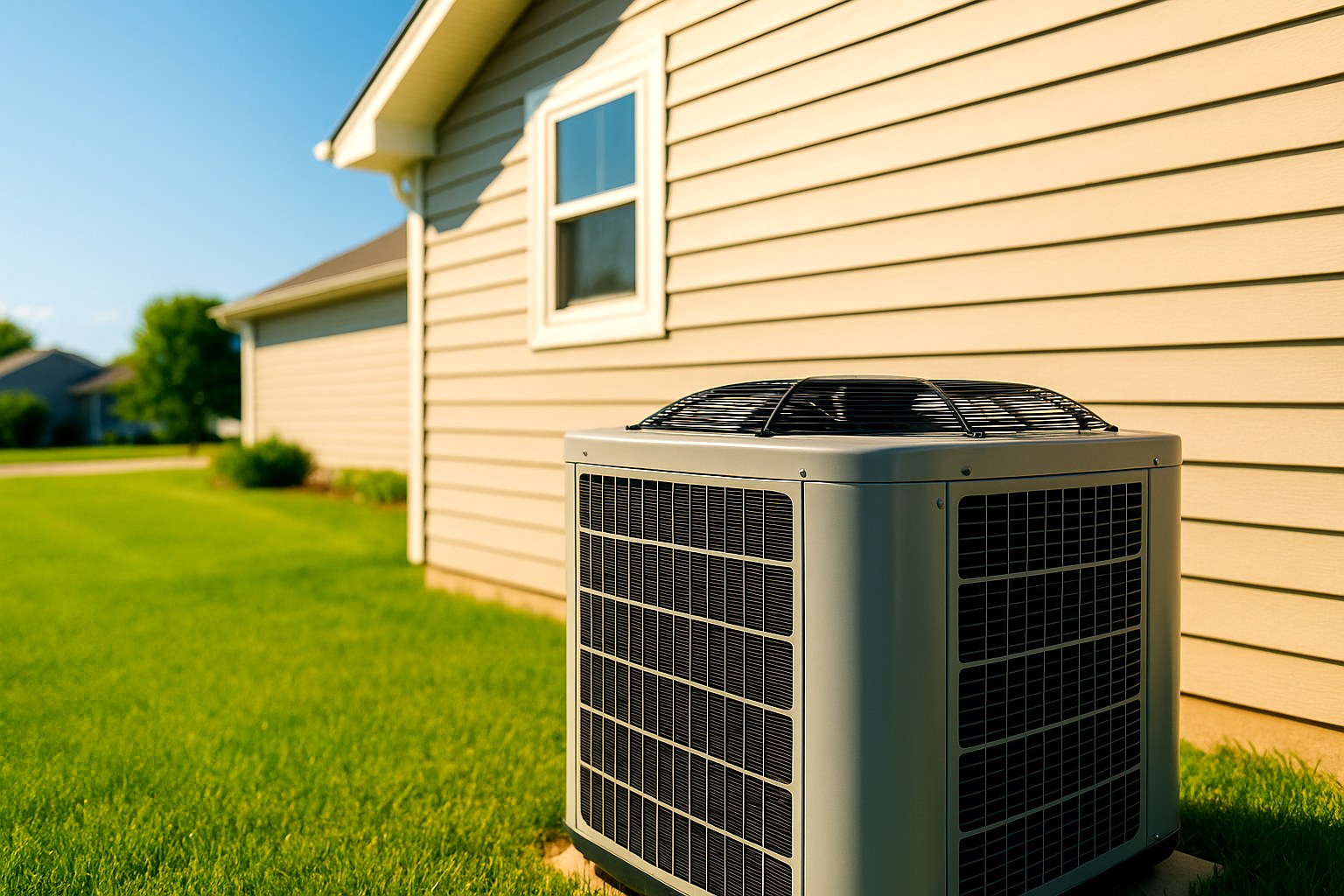
It’s 9:04 PM on a Tuesday in July, somewhere in Texas. The house has been holding at 78° all evening and now the thermostat reads 84 and climbing. The homeowner goes outside, hears the outdoor unit humming but not spinning, and does what every homeowner does next: pulls out a phone and searches for AC repair. Your shop comes up. She calls. And what happens in the next forty-five seconds decides whether that compressor pays your shop or the one across town — because she is not going to bed in an 84° house, and she is not waiting for your office to open.
The 9 PM compressor death
Equipment doesn’t fail on office hours. It fails at the end of the hottest day of the year, after eight hours of running flat out, which is why the calls stack up between dinner and midnight all summer long. And here’s the part that stings: the 9 PM caller is the best lead your shop will ever get. She’s not comparison shopping or collecting three bids for a spring changeout. She has a dead system, a hot house, sometimes a baby or an elderly parent in it, and a card in her hand. Price sensitivity is at its lowest and urgency is at its highest — and that is precisely the hour most shops route to a voicemail greeting recorded in 2019.
Every one of those calls is same-day money that either lands on your board or someone else’s. There’s no third outcome where the job politely waits for morning. And the stakes climb from there: tonight’s emergency repair is often next month’s changeout conversation, next year’s maintenance agreement, and the review that wins the next neighbor. The shop that answers at 9 PM isn’t winning one ticket — it’s winning the household.
Why they don’t leave voicemail
Owners tell me, “We have voicemail, we call everyone back first thing.” The problem is the caller never agreed to that plan. According to caller research from Invoca, roughly 27% of callers whose first call goes unanswered give up and never call back at all — and that’s across all hours. At 9 PM with a dead AC, the behavior is harsher: the search results page that produced your number is still open on her phone, and the next shop is one tap away. Voicemail isn’t a queue; it’s a referral to your competitor.
Speed compounds the effect even when a message does get left. A lead-response audit published in Harvard Business Review in 2011 found that companies attempting contact within an hour were nearly seven times more likely to qualify the lead than those that waited even an hour longer. “First thing tomorrow” is ten hours late by that measure. We ran the full revenue math on this in the true cost of a missed call — after hours is simply where that math runs hottest, because it’s where intent peaks and coverage disappears at the same moment.
The three ways shops handle it today
Option one: the owner’s cell. This is the default, and it works right up until it wrecks you. The night line rings the owner, the owner answers from the couch, the dinner table, the kid’s game. It’s free on paper and enormously expensive in practice: you become the one employee who can never be off shift. Ask any owner who’s run this way for a few Julys — the phone doesn’t just interrupt evenings, it trains you to dread your own business. And the night you finally silence it is, reliably, the night the $12,000 changeout calls.
Option two: a human answering service. A real improvement over voicemail — a person picks up. But look closely at what you’re buying: most services take a message and relay it, which means the caller still isn’t booked, still doesn’t have a time, and still has that search page open. The pricing reflects the labor: Ruby, one of the best-known services in the category, lists published rates from $250 to $1,725 a month depending on how many minutes you buy. Metered minutes also mean July — your loudest month — is your biggest bill, and a chatty caller literally costs you money. You’ve paid for a polite version of voicemail with a monthly meter on it.
Option three: nothing. No exaggeration — plenty of shops let the night line ring to a full mailbox. These are donated jobs. Some competitor’s best revenue this July is arriving by this route, at zero acquisition cost, from shops that spent real money on ads and the map to make their phone ring and then let the ring die at 8 PM.
What good coverage looks like
Here’s the standard I’d hold any solution to, human or AI, and it starts with a principle: good after-hours coverage is not “answer everything and wake everyone.” It’s triage — and the triage rules have to be yours.
The owner writes the rules. You decide what counts as tonight versus tomorrow. No cooling with an infant, an elderly resident, or a medical situation in the house? That wakes the on-call tech and books the next truck. Warm air but livable, a maintenance question, a “it’s making a noise but running”? That books tomorrow’s 8 AM slot on the spot — the caller hangs up with a confirmed time, so the search page finally gets closed. This is exactly how we built the Cloud 9 HVAC desk to run at night: your emergency definition, your escalation list, your trip fee, executed the same way at 9 PM as at 2 AM.
It books, it doesn’t diagnose. The night line’s job is to capture symptoms accurately and put the visit on the board — never to play technician over the phone. Diagnosis belongs to your techs in the driveway, with gauges on the system.
It answers in the caller’s language. An English-only night line in a Texas market hands a real share of the after-hours map to whoever answers en español. Both languages, same conversation, same booking.
You can read every word the next morning. Whatever answers your phone at night is speaking in your shop’s name while you sleep. Every call should be transcribed and readable, so trust is verified rather than assumed. That’s the bar we hold our own front desk to, and it’s a fair bar for anyone else’s.
And when a call still slips through, it gets caught in seconds. Even good coverage has edges — the caller who hangs up on ring two, the text that comes in mid-call. A missed-call text-back puts a message in that caller’s hands before the search page does its damage: “We just missed you — what’s going on with the system?” It’s the cheapest insurance in the whole stack.
The shoulder-season angle
One more thing owners miss because the July emergency dominates the conversation: after-hours coverage isn’t only an emergency tool. In April and October, the 9 PM caller isn’t sweating — she’s the homeowner who finally has a quiet minute after the kids are down, remembered the system hasn’t been serviced in two years, and called to book a tune-up. There’s no urgency pushing her to dial a second shop, but there’s nothing anchoring her to yours either; if she hits voicemail, the errand simply evaporates until some other evening, or some other shop’s reminder gets there first. A night line that books her on the spot quietly fills the exact weeks when the board is thinnest. The surge makes after-hours coverage feel urgent; the valley is where it compounds.
What it comes down to
July’s after-hours calls are going somewhere tonight. The only question is whether your shop is reachable when they move. The owner’s cell answers them at the cost of the owner. The message service answers them at metered rates without booking them. Voicemail donates them. The fourth option — a desk that answers every night call in seconds, in both languages, triages by rules you wrote, wakes your tech only when your rules say so, and books everything else into tomorrow’s first slots — is what we run for HVAC shops as part of one team at one flat rate, and it’s the piece of the machine that pays for itself first in a Texas summer.
If you’re weighing whether an AI desk can actually carry that load without embarrassing you, we wrote the honest version of that answer — including where it fails and how to test any vendor by phone — in Do AI receptionists actually work for HVAC? Read that one next, then make the test call and judge for yourself.

25+ years running businesses, one nationwide e-commerce company, and every lesson on this page learned the expensive way first. The machine we write about runs our own phones — call 210-880-3390 tonight and you'll hear it.
The story How it works